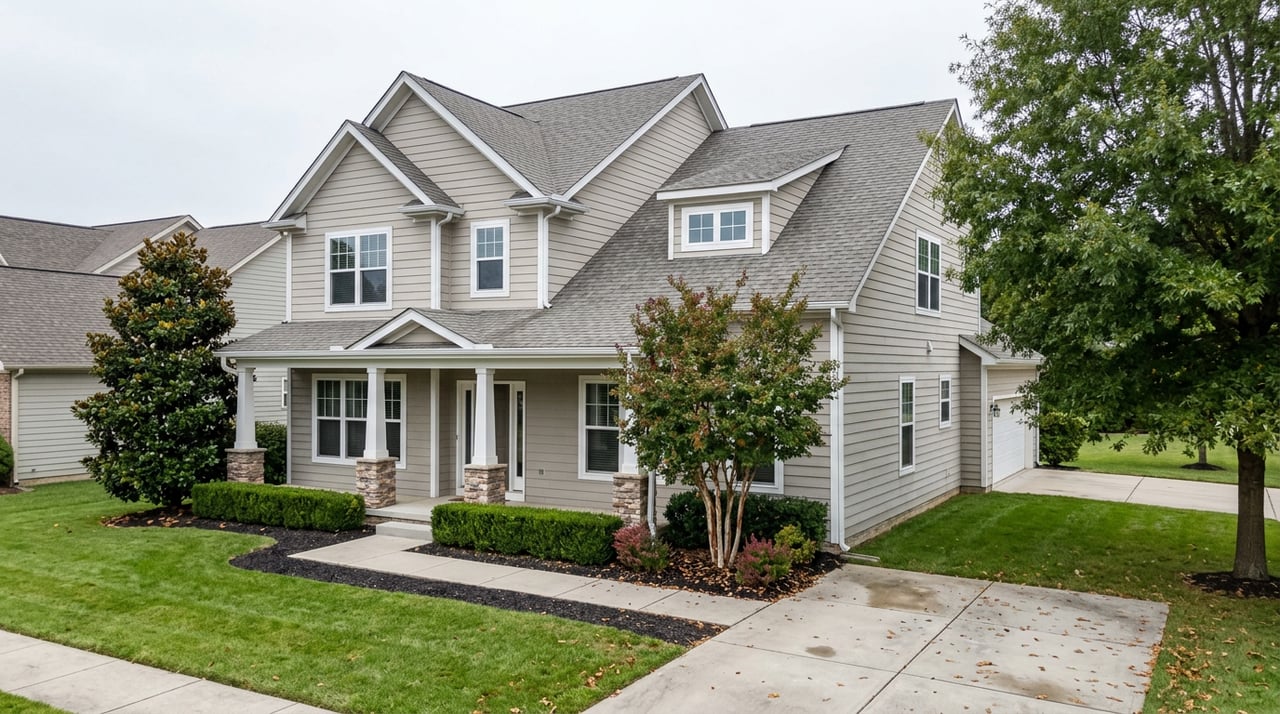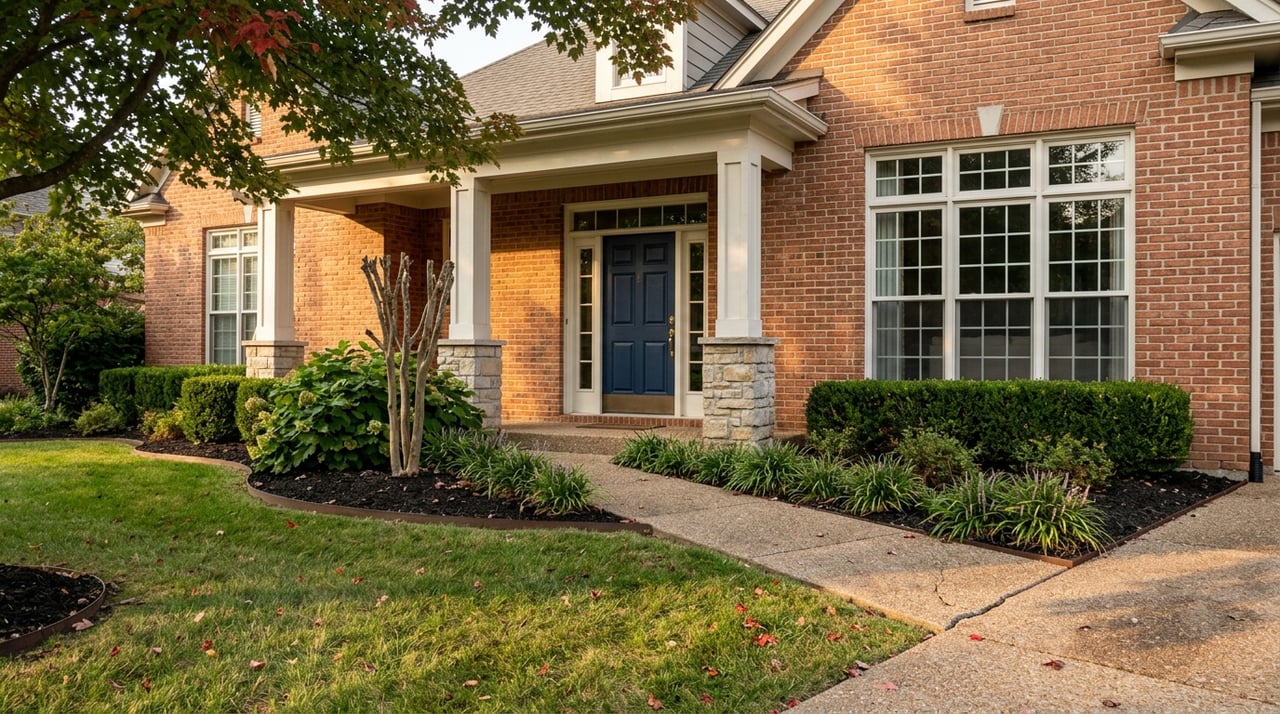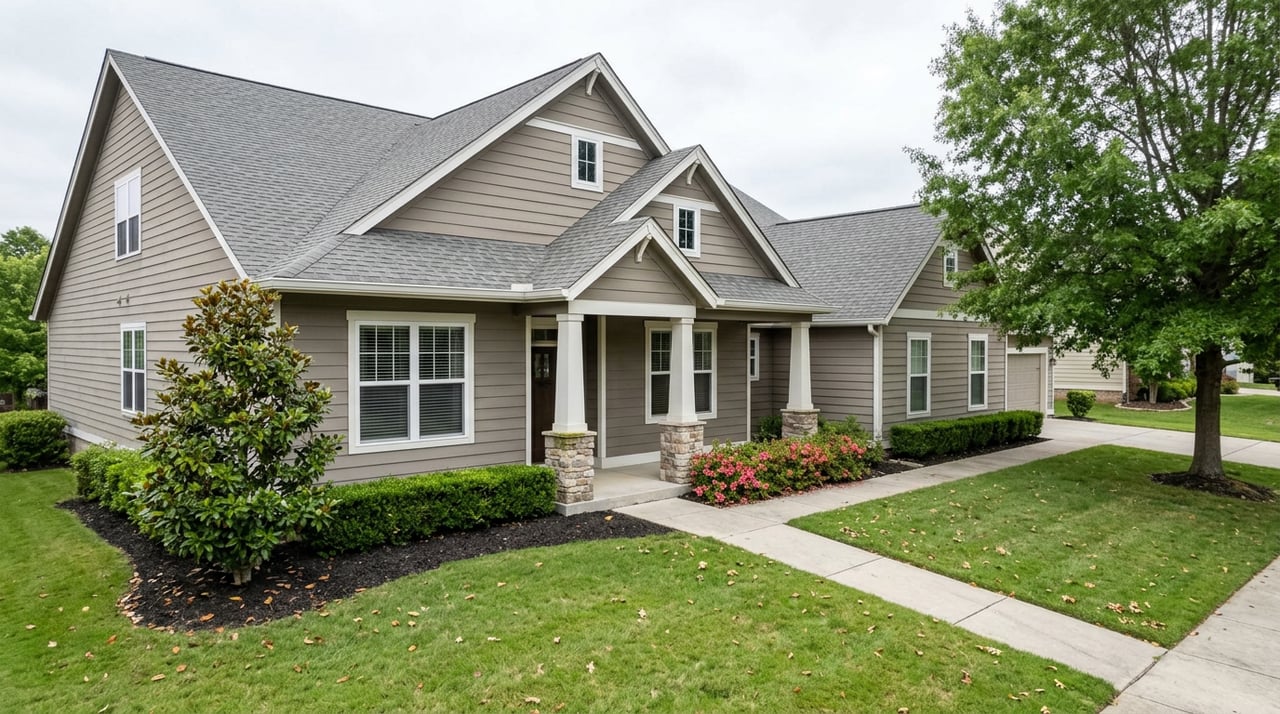
A buyer touring Huntersville right now will notice something odd if they check more than one source before making an offer. One site says the median home sold for $460,000. Another says $614,999. A third pegs it closer to $581,000. Days on market look just as unstable: one read shows homes taking 48 days to go under contract, another shows 104 days to actually close. None of these numbers are wrong. They're measuring different things, at different points in a year that changed shape halfway through.
That distinction matters more than the raw figures. If you're comparing Huntersville to Cornelius or Davidson, or trying to decide whether a listing that's been up for six weeks is a bargain or a warning sign, the "average days on market" for the whole town tells you almost nothing on its own. The town's market split into two lanes during 2026, and the average blends both without telling you which one you're looking at.
The Year Inventory Loosened, Twice
Start with what actually shifted. In the first quarter of 2026, Canopy MLS figures for Huntersville showed a tight market: about 2.4 months of inventory, homes selling at 97.8% of list price, and a typical 31 days on market. That's a seller-favored read by almost any measure.
By late August, inventory in Huntersville had grown to roughly 4.1 months, a level generally read as balanced rather than tight. Two independent trackers show the same direction on speed. One measured a jump from 41 to 48 days on a trailing three-month basis through June. Another, tracking full listing-to-close time in July, showed 104 days versus 62 days a year earlier. Different methodologies, same signal: homes that used to move in about a month are now frequently taking two to three times that long.
What didn't move nearly as much is price. The trailing three-month median through June sat at $582,000, and the single-month read for July was $614,999. Single-family homes specifically were sitting around $581,000 in August. None of that looks like a price collapse. It looks like a market where the clock slowed down but the price tag didn't.
That's the part worth sitting with. A market where days-on-market doubles while price holds steady isn't behaving like a normal cooling cycle, where slower sales and softer prices usually move together. Something else is absorbing the slack.
Why Five Sources Give You Five Different Median Prices
Before getting to that "something else," it helps to understand why the median price question doesn't have one clean answer. Each figure below is real. They're just measuring different slices of the same town.
| What's Being Measured | Time Window | Median Price |
|---|---|---|
| Resale closings, Canopy MLS | Q1 2026 | $460,000 |
| Trailing 3-month resale closings | Through June 2026 | $582,000 |
| Single-month closings, all types | July 2026 | $614,999 |
| Single-family only | August 2026 | $581,000 |
| New construction only | Early 2026 | $620,092 |
The new-construction figure runs high because it's excluding the town's older, cheaper resale stock entirely. The Q1 resale figure runs low relative to summer because it's an earlier snapshot from a market that has since shifted. None of these are apples to apples, and a buyer who anchors to one number without asking what it measures is going to misjudge what a fair offer looks like.
The Real Reason Homes Are Sitting Longer
Here's the mechanism. Huntersville's existing housing stock largely dates to the town's initial growth spurt in the 1990s, which means a meaningful share of resale inventory is now aging into the point where roofs and HVAC systems need real money spent on them. A buyer touring one of these homes is pricing in a near-term capital expense, and sellers who haven't addressed that upfront are competing at a disadvantage they may not fully recognize.
At the same time, new construction has kept adding supply in a way that directly competes with that resale stock. Bryton, the master-planned community built out by Pulte Homes and Eastwood Homes, has continued releasing new sections. The Retreat at Westbranch and Skybrook North on the town's northeast edge add more turnkey inventory with builder warranties and modern systems, which is exactly the reassurance an aging resale home can't offer without a recent renovation.
Put those two forces together and the picture gets clearer. A buyer choosing between a dated 1990s resale home and a new-construction townhome at Bryton, at similar price points, increasingly picks the one without a looming roof replacement. That pulls demand away from older inventory, which then sits longer waiting for the right buyer, one who's either planning renovations anyway or negotiating the capex into the price. Meanwhile, homes that are already updated, or sitting along the walkable Birkdale Village corridor where retail and dining density keeps demand steady, continue moving at something closer to the old 30-to-40 day pace.
The town-wide average blends a fast lane and a slow lane that are pulling further apart. That's a market restructuring itself around age and condition, not a market losing overall demand.
What This Means When You're Touring a Listing
If you're actively looking at homes in Huntersville, the practical takeaway is to stop treating "days on market" as a single verdict and start reading it alongside two other facts: the home's age and its proximity to the amenities that keep demand steady.
A few reference points worth carrying into a tour:
- Homes built or substantially updated in the last decade, especially near Birkdale Village, are the ones still moving close to the old 30-day pace.
- A listing sitting past 60 to 90 days in an older subdivision isn't automatically overpriced. It may simply be competing against a Bryton or Westbranch floor plan with a builder warranty attached.
- Golf and waterfront communities like Northstone and The Peninsula, which straddles Cornelius and Huntersville, tend to draw a different buyer pool entirely and shouldn't be used as a price comparison for a standard subdivision resale.
- If you're relocating from out of state, factor in Huntersville's roughly 1.03% effective property tax rate and a commute to Uptown that runs anywhere from about 22 minutes off-peak to 45 minutes during rush hour on I-77. Those numbers change the real monthly cost math more than a few thousand dollars of negotiating room.
None of this means resale is a bad choice. It means the sitting time on a specific listing needs context before it tells you anything about leverage.
For Sellers, the Same Logic Runs in Reverse
If you're preparing to list an older Huntersville home this fall, the days-on-market conversation isn't really about the town average. It's about which lane your home is competing in. A well-maintained resale home priced to reflect its condition, ideally with a clear accounting of roof and HVAC age, competes on its own terms. One priced as though it's 2024 and marketed without addressing the capex question is effectively asking buyers to compare it unfavorably against a warrantied new build a few miles away.
That's a pricing and preparation conversation, not a guessing game, and it's exactly the kind of read that benefits from someone who's watching these two lanes diverge in real time rather than reacting to a single average after the fact.
A Few Questions Worth Asking Before You Offer or List
Is Huntersville a buyer's market now? Not uniformly. Inventory has loosened from 2.4 to roughly 4.1 months over the course of 2026, which favors buyers overall, but well-positioned homes near Birkdale Village or in move-in-ready condition are still moving close to the old pace.
Does new construction always cost more than resale here? Not necessarily at the entry level. Some new-construction listings at Bryton have started in the low $500,000s, overlapping with older resale homes that need work. The real comparison is total cost including near-term repairs, not just the sticker price.
Why does one site say the median is $460,000 and another says $614,000? They're measuring different things: different time windows, different property mixes, and in some cases automated value estimates rather than actual closed sales. Always check what a number is measuring before using it to justify an offer or a listing price.
If you're weighing a move into Huntersville, or trying to price a home that's been sitting longer than you expected, the numbers alone won't settle it. Ashley Hannah Murphy works this corridor closely enough to tell you which lane your home, or your next home, actually belongs in. Schedule your free consultation to talk through what the current split market means for your specific situation.