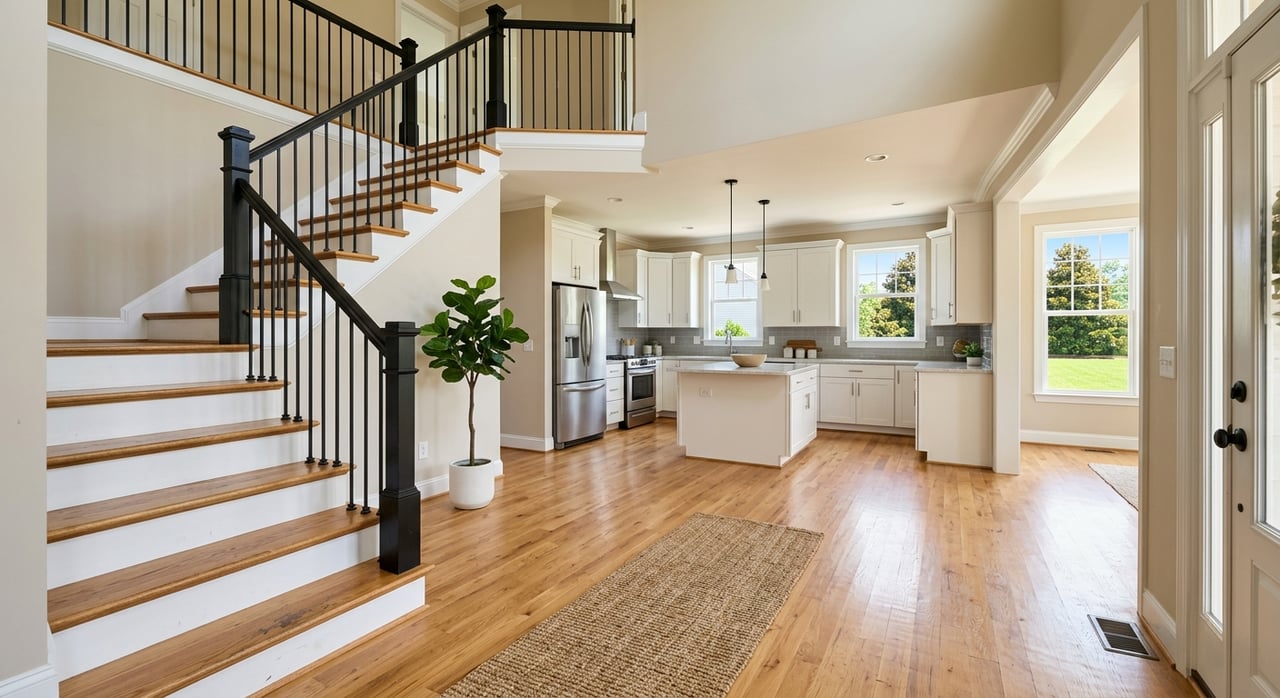
Buying your first home in Huntersville can feel exciting one minute and overwhelming the next. You may be wondering how much house you can truly afford, how fast you need to act, and what makes North Carolina different from other markets. This roadmap will walk you through the key steps, costs, and local details that matter most so you can move forward with more clarity and confidence. Let’s dive in.
Understand the Huntersville market
If you are starting your home search in Huntersville, it helps to know that this is not a one-price-fits-all market. Recent market snapshots show median prices in the mid-$500,000s, with Redfin reporting a March 2026 median sale price of $567,817 and Realtor.com reporting an April 2026 median listing price of $574,500 and a median sold price of $557,500.
The pace is active, but it is not the kind of market where every home automatically sparks a bidding war. Realtor.com reported 667 active listings, a 99% sale-to-list ratio, and 34 median days on market in April 2026, while Redfin reported an average of 60 days on market in March 2026. For you, that means being prepared matters, but so does staying calm and focused.
Neighborhood pricing also varies quite a bit across Huntersville. Realtor.com neighborhood data shows median listing prices around $557,000 in Vermillion, $748,895 in Northstone, $750,000 in Birkdale, and $1.1 million in Olmstead. That range is a good reminder to search based on monthly payment and lifestyle fit, not just the city name.
Start with preapproval
Before you tour too many homes, get preapproved once you are serious about buying. A preapproval letter shows a seller that a lender has taken an early look at your finances and is tentatively willing to lend to you. It is often required before a seller will seriously consider your offer.
Just keep one important point in mind. A preapproval is not a final loan commitment. The Consumer Financial Protection Bureau says it is based on assumptions, and it often expires within 30 to 60 days.
That means timing matters. If you get preapproved too early, you may need to refresh it before you make an offer. If you wait too long, you could lose valuable time when the right home hits the market.
Why lender shopping matters
Many first-time buyers talk with one lender and stop there. That can cost you more than you think. The Consumer Financial Protection Bureau recommends requesting multiple Loan Estimates once you have a specific home in mind and comparing them side by side.
Lenders must provide a Loan Estimate within three business days after receiving six key pieces of information from you. You do not need a signed purchase agreement to get one. According to the same guidance, shopping around can save homebuyers about $600 to $1,200 per year in mortgage costs.
North Carolina help for first-time buyers
If you are buying in North Carolina, you may want to look into NCHFA assistance programs. The NC Home Advantage Mortgage offers down payment assistance of up to 3% of the loan amount. Eligible first-time buyers and military veterans may also qualify for the $15,000 NC 1st Home Advantage Down Payment option.
Current NCHFA guidance says buyers must purchase in North Carolina, move into the home as a principal residence within 60 days of closing, and meet lender program requirements, including a minimum 640 credit score. If you think you may qualify, it is smart to ask your lender about these options early.
Build a smart Huntersville search plan
Once financing starts coming into focus, your home search needs a plan. It is easy to get drawn in by pretty photos or a list price that seems doable. What matters more is whether the home fits your real monthly budget.
The Consumer Financial Protection Bureau recommends keeping your budget and priorities front and center while you search. In Huntersville, that means looking beyond the purchase price and factoring in property taxes, HOA dues, insurance, and other ongoing costs before you stretch your budget.
Compare homes by monthly cost
This step is especially important in Huntersville because neighborhood price bands vary so much. Two homes may look close in price, but your monthly cost can be very different once taxes, HOA fees, and insurance are added in.
When you start seriously considering a property, share accurate tax and HOA information with your lender right away if those costs will be escrowed. That helps your lender give you a more realistic picture of what the payment may look like. It also helps you compare homes on the number that affects your life most each month.
Keep your priorities simple
If this is your first purchase, try not to solve every future need with your first home. A clear set of priorities makes decisions easier and helps you act faster when a good fit appears.
A simple priority list might include:
- Your target monthly payment range
- Preferred home type, such as single-family, condo, or townhome
- Commute or location needs
- Must-have features, like number of bedrooms or outdoor space
- Nice-to-have features you can live without if needed
Know North Carolina due diligence
One of the most important parts of buying a home in North Carolina is understanding the due diligence period. This is a North Carolina-specific part of the contract that first-time buyers need explained clearly.
According to the North Carolina Real Estate Commission, the due diligence period is your contractual window to investigate the property and the transaction. During this time, you can look into the home’s condition, financing, title matters, and other important details before moving forward.
What happens during due diligence
A lot can happen during this period. Common due diligence items include:
- Home inspection
- Pest inspection
- Septic inspection, if applicable
- Survey
- Appraisal
- Title search
- Loan qualification and application steps
- Repair negotiations
If you decide to terminate during the due diligence period, you can do so before the deadline by written notice. The seller does not need to consent to that termination.
Understand the due diligence fee
The due diligence fee is another detail that often surprises first-time buyers. The North Carolina Real Estate Commission notes that this fee is negotiated and is generally not refundable.
It is also worth knowing that North Carolina law and Commission rules do not require buyers and sellers to use the standard form or include a due diligence fee at all, even though it is common in practice. Because this can affect your cash outlay and your risk, you should understand exactly what you are agreeing to before you submit an offer.
Prepare for closing day
Once you are under contract and moving toward the finish line, closing prep becomes the focus. This is where details matter. Staying organized can help you avoid last-minute stress.
The Consumer Financial Protection Bureau says your lender must give you a Closing Disclosure at least three business days before closing. This document shows your final loan terms, monthly payment, and closing costs.
Review your final numbers carefully
Do not just glance at the Closing Disclosure and move on. Use those three business days to compare it with your Loan Estimate and look for changes in fees, credits, or cash needed at closing.
This is your chance to ask questions before signing. If something looks different than expected, bring it up right away so you understand the numbers clearly.
Do a final walk-through
Before closing, do a final walk-through of the property. The Consumer Financial Protection Bureau recommends using this step to confirm agreed repairs were completed and that any included items are still in place.
This is not just a formality. It is your last chance to check the home’s condition before ownership transfers.
Budget for costs after closing
Your home payment is only part of what you need to budget for after you buy. First-time buyers sometimes focus so much on down payment and closing costs that the ongoing costs get less attention. In Huntersville, those recurring costs can make a real difference.
Mecklenburg County’s FY2026 property tax rate is 49.27 cents per $100 of assessed value. The county also notes that real estate taxes are due September 1 and are based on the property’s value as of January 1. On top of that, the total tax bill includes a municipal tax from the city or town, which matters when you estimate ownership costs in Huntersville.
Build a realistic homeowner budget
After closing, it is wise to set aside funds for the costs that continue month after month. If taxes and homeowners insurance are not included in escrow, you will need to plan for those separately. You should also leave room for repairs and maintenance.
A practical homeowner budget should include:
- Mortgage principal and interest
- Property taxes
- Homeowners insurance
- HOA dues, if applicable
- Utilities
- Routine maintenance and repair savings
A simple first-time buyer roadmap
If you want to keep the process clear, break it into manageable steps. You do not have to know everything on day one. You just need to take the next right step.
Here is a simple roadmap you can follow:
- Review your budget and decide what monthly payment feels comfortable.
- Get preapproved when you are serious about shopping.
- Ask about North Carolina first-time buyer assistance programs.
- Compare homes based on full monthly cost, not just list price.
- Make an offer with a clear understanding of due diligence terms.
- Complete inspections, financing steps, and negotiations during due diligence.
- Review your Closing Disclosure carefully.
- Do your final walk-through and close with confidence.
Buying your first home in Huntersville can feel like a lot, but it becomes much more manageable when you understand the local market and the North Carolina process. With the right guidance, a realistic budget, and a step-by-step plan, you can make smart decisions without feeling rushed or overwhelmed.
If you are ready to map out your next step, Ashley Hannah Murphy offers personalized buyer guidance to help you move forward with confidence.
FAQs
What is the first step for a first-time homebuyer in Huntersville?
- The first step is usually reviewing your budget and getting preapproved once you are serious about shopping, so you know your price range and can act quickly when you find the right home.
How competitive is the Huntersville real estate market for first-time buyers?
- Recent data shows a moderately competitive market with median prices in the mid-$500,000s, active listings available, and homes taking about 34 to 60 days on market depending on the source and month.
What makes buying a home in North Carolina different for first-time buyers?
- One major difference is the due diligence period, which gives you a contractual window to investigate the property and transaction details, and the due diligence fee is commonly negotiated and generally not refundable.
Are there down payment assistance programs for first-time buyers in North Carolina?
- Yes. NCHFA offers programs such as the NC Home Advantage Mortgage with up to 3% down payment assistance, and some eligible first-time buyers and military veterans may qualify for the $15,000 NC 1st Home Advantage Down Payment option.
What costs should Huntersville homebuyers include besides the mortgage?
- You should budget for property taxes, municipal taxes, homeowners insurance, HOA dues if applicable, utilities, and an ongoing repair and maintenance cushion.